
How Much Should I Spend on a Massage Chair?
Answer first: budget for mechanism, body fit and room clearance. Almost everything above that is refinement — worth paying for only if you know you want it.
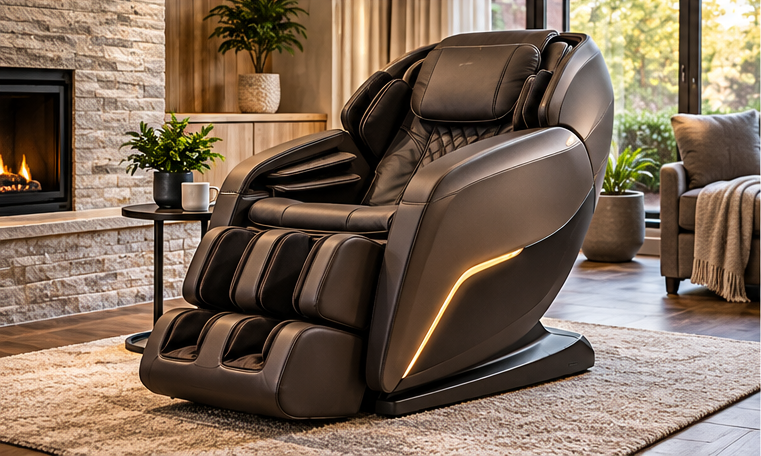
Full-body massage chairs span a very wide price range. Entry models can start around $900 to $1,500, feature-rich chairs often fall around $2,500 to $6,000, and premium 4D models can run $6,000 to $15,000 or more. Spend what it takes to get the three things you will feel every day: a mechanism that reaches your whole back, a fit that matches your height, and a chair your room can actually recline in. Above that point, most of the price increase buys additional programmes, materials and refinement rather than a fundamentally different massage.
Chair price only. Delivery, in-room placement and any electrical check are separate, and these are heavy items that often need two people and a clear route. Ranges are guidance, not quotes. Verified 6 September 2026.
Know your budget, height range and clearance?
Visitor understands which capabilities appear at each level of spend, which ones they will actually feel, and what their room and body size allow — so they can set a budget deliberately instead of anchoring on a showroom price.
The short version
A massage chair is one of the few wellness purchases where price and experience are only loosely related above a certain point. The chair either reaches your back properly, fits your body and fits your room — or it does not. Those three things should set your budget. Everything else is preference.
That is why we start with capability rather than a price tier. Once you know which capabilities you need, the appropriate spend becomes obvious, and it is often lower than the showroom conversation suggests.
What extra spend actually buys
Mechanism reach and movement
The single biggest experiential difference. How far the rollers travel along your back and neck, and how many directions they move in, changes what the massage can do. This is the capability worth protecting in your budget.
Body fit
Roller track length and shoulder width are physical constraints. A chair that is excellent for someone shorter can miss the neck and shoulders entirely on someone taller. Fit is not a premium feature — it is a requirement, and it varies by model, not by price.
Room clearance
Full recline needs space behind the chair unless the model is designed to slide forward as it reclines. Measure the wall clearance you have before you set a budget; the constraint may decide the category for you.
Programmes and adjustability
Higher spend usually adds programmes, more granular intensity control and body-scanning refinement. Genuinely useful if more than one person will use the chair with different preferences. Easy to overpay for if you will use two settings.
Materials, noise and longevity
Upholstery quality, mechanism noise and serviceability tend to improve with price. These are comfort-of-ownership factors rather than massage quality factors — and they matter more the more often you plan to use the chair.
Before you set a number
Five checks that will change your budget more than any feature list.
- Measure the wall clearance behind the chair and the floor footprint at full recline.
- Check the model's stated user height and shoulder-width range against the tallest person who will use it.
- Decide whether the chair is for recovery after activity, for daily relaxation, or for a specific discomfort — the answer changes which capability matters.
- Confirm delivery access: these are heavy, large items and often need two people and a clear route.
- Ask what the warranty covers on the mechanism specifically, and who performs service.
Supporting questions
Is a more expensive chair a better massage?
Up to the point where the mechanism reaches your whole back and fits your body, yes — meaningfully. Beyond that, additional spend mostly buys programmes, refinement and materials.
Do I need 4D?
Only if you want control over pressure depth as well as position. The mechanism comparison guide covers what the difference changes in practice.
What is the most common regret?
Buying a chair that does not fit the person who uses it most, or one that cannot fully recline in the room it lives in. Both are avoidable with measurements.
Deeper details
Affiliate disclosure: some links on Human Home Living may be affiliate links, and we may earn a commission at no additional cost to you. That does not affect our conclusions. See our affiliate disclosure and editorial standards.