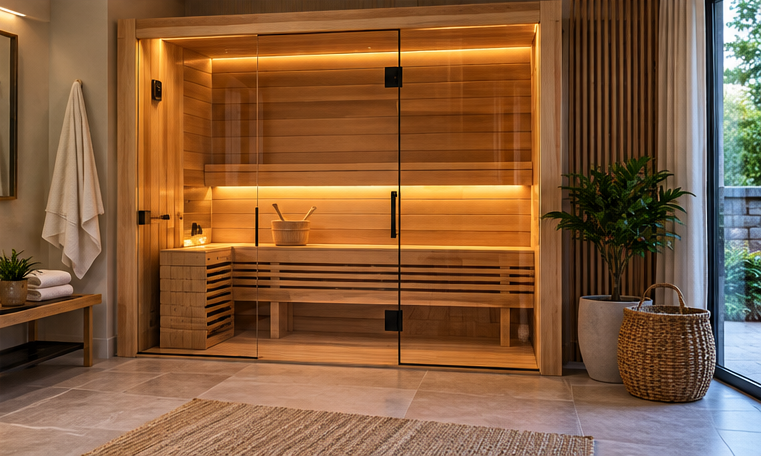
What to Know Before Buying a Home Sauna
Cabin price is the smallest part of a sauna decision. Power, placement, ventilation and installation type determine what you can actually put in your home.
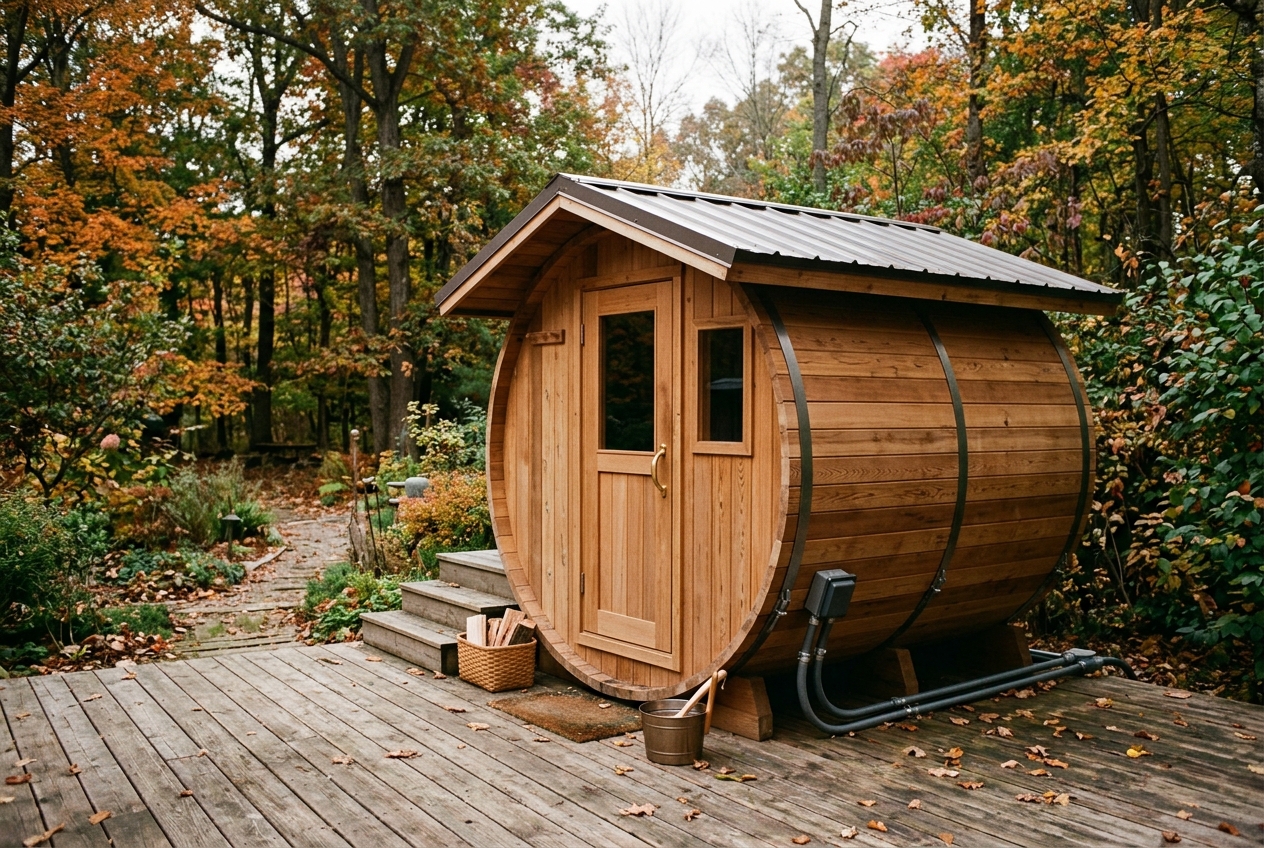
Most home sauna projects land roughly between $2,500 and $10,000, although the type of sauna and the installation can move the total significantly — infrared cabins can start around $1,500, while larger outdoor or custom projects can run well above $10,000. What usually decides where you land is not the cabin, it is the electrical work. Traditional saunas above a modest heater size generally require a dedicated 240V circuit sized by the manufacturer; smaller heaters and many infrared cabins can run on a standard household circuit. Decide indoor or outdoor, traditional or infrared, and confirm what your panel can support — in that order — before you shortlist a single cabin.
Project ranges include typical installation; cabin-only figures are labelled as such. Electrical labour, permits and site conditions vary widely by home and location. Ranges are guidance, not quotes. Verified 6 September 2026.
Already know the sauna type and where it's going?
Visitor understands the electrical, space, ventilation and installation requirements that determine which sauna category is realistic for their home.
Start with the question your electrician will ask
Homeowners usually start a sauna search by browsing cabins. That is understandable — cabins photograph well. But the first real constraint is almost always electrical, and it is worth resolving before you fall in love with a specific model.
Traditional saunas heat a room with an electric heater and hot stones. Heat output scales with heater size, and heater size scales with cabin volume. Larger heaters draw meaningfully more current and generally require a dedicated 240V circuit specified by the manufacturer. Smaller heaters — and many infrared cabins, which heat the body rather than the room — can often run on a standard household circuit.
That single fork determines cost, timeline and whether your project needs a licensed electrician and possibly a panel upgrade.
The five decisions that shape the whole project
Indoor or outdoor
Indoor saunas need a moisture-tolerant location, adequate ventilation, and a floor that can handle water. Outdoor saunas need a level base or pad, weather-appropriate construction, a route for electrical supply, and in cold climates, real attention to insulation and heat-up time. Outdoor cabins usually simplify moisture management and complicate power supply.
Traditional or infrared
Traditional saunas produce higher air temperature and let you use water on stones for humidity. Infrared cabins operate at lower air temperatures and heat the body directly. Neither is universally better — they are different experiences. Traditional suits people who want heat and steam; infrared suits people who want lower-temperature sessions, shorter warm-up, and often simpler power requirements.
Capacity — how many people, honestly
Bench layout matters more than nominal seat count. A cabin rated for several people may only seat two comfortably lying down. Decide whether you want to recline, whether two people will use it together, and measure the bench depth rather than trusting the person count.
Installation type
Pre-built cabins arrive largely assembled and are the fastest path. Kit saunas are assembled on site. Custom-built saunas are framed into an existing room and offer the best fit but require a contractor. Each has different delivery access requirements — measure your doorways, stairs and turns before ordering anything pre-built.
Ventilation and clearances
Every sauna heater has published clearance requirements to benches, walls and combustible surfaces, and traditional saunas need intake and exhaust air paths to work properly. These requirements are not optional and are the most commonly ignored part of a DIY sauna install.
Supporting questions
Can I put a sauna in a basement?
Often yes, and basements are a common location. The requirements are a moisture-tolerant floor, a drain or a plan for water, real ventilation (not just an open door), sufficient ceiling height for the cabin, and a route for a dedicated circuit from the panel — which is usually nearby, an advantage of basements.
Can a sauna go in a bathroom?
It can, and it is a natural pairing with an existing shower and drain. The constraints are floor area, ceiling height, and electrical work in a wet location, which has its own code requirements. This is a case where an electrician's input comes before product selection.
How long does a sauna take to heat up?
Heat-up time depends on heater output relative to cabin volume, insulation, and starting temperature — an outdoor cabin in winter behaves very differently from an insulated indoor cabin. Manufacturers publish heat-up guidance per model, and that is the figure to compare. Infrared cabins generally reach usable operating conditions faster because they are not heating a whole room's air mass.
What maintenance should I expect?
Traditional saunas: periodic bench cleaning, stone inspection and replacement over time, and attention to ventilation. Infrared: emitter and cabin cleaning. Outdoor cabins add exterior finish maintenance on the manufacturer's schedule. None of this is heavy, but outdoor wood cabins are not maintenance-free.
Does a sauna add value to a home?
We do not make resale-value claims. Buyer preference for a sauna varies by region and by buyer. Treat a sauna as something you are buying for your own use, and budget accordingly.
How to actually proceed
Confirm your location and whether it is indoor or outdoor. Measure the space, including delivery access. Decide traditional or infrared based on the experience you want, not the price. Then have an electrician confirm what your panel supports — before you order.
Once those four things are settled, the cabin decision becomes straightforward, and you will be comparing products on the dimensions that matter instead of on photography.
Deeper details
Affiliate disclosure: some links on Human Home Living may be affiliate links, and we may earn a commission at no additional cost to you. That does not affect our conclusions. See our affiliate disclosure and editorial standards.