Building an Outdoor Kitchen: Where Should I Spend the Money?
The order you spend in matters more than the total. Build the things that are hard to change first, then buy the cooker that matches how you actually cook.
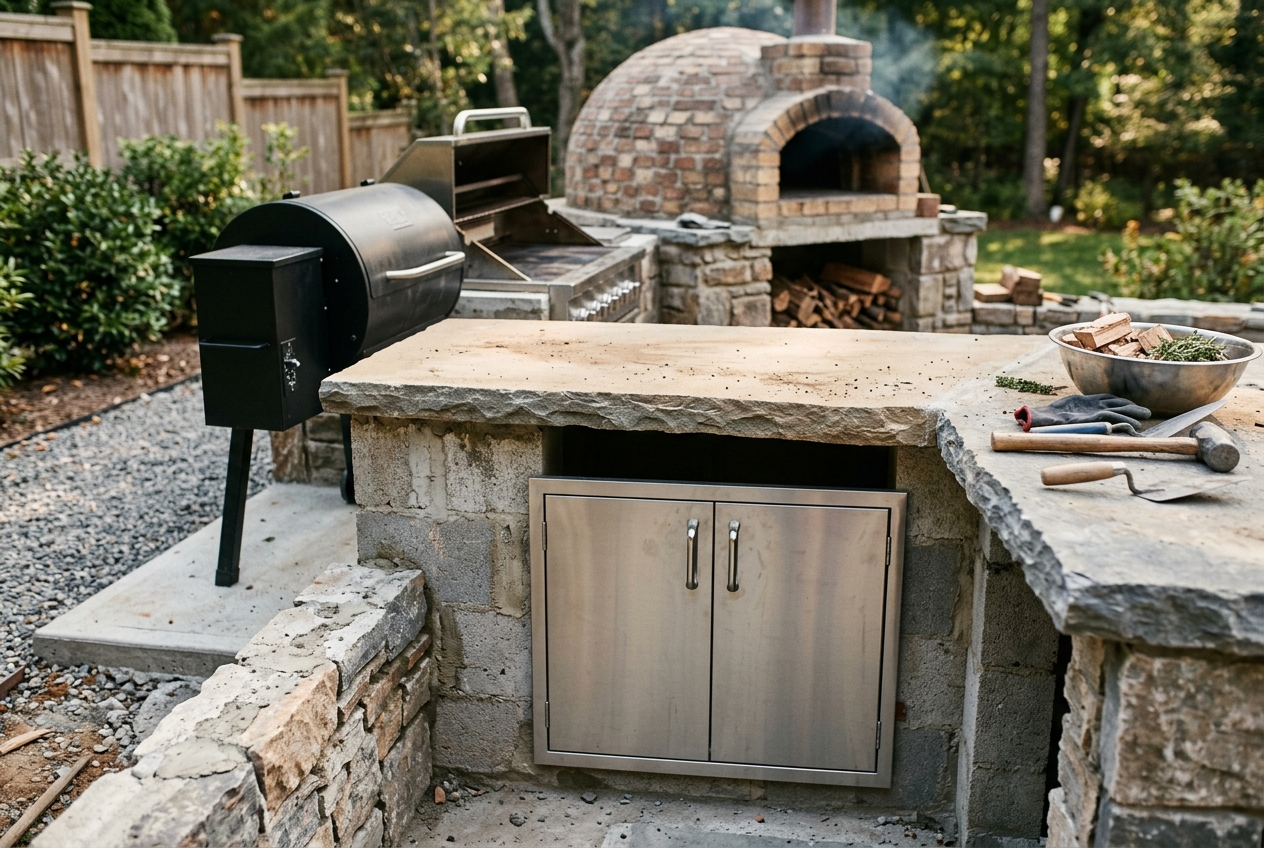
Many complete outdoor kitchen projects fall roughly between $6,000 and $30,000, although a simple island can cost much less and a large custom kitchen can exceed $30,000 quickly. Where that money goes matters more than the total: spend first on the things that are expensive or disruptive to change later — the structure, the counters, the utilities and shade. Spend next on the cooking equipment that matches how you actually cook, because one excellent primary cooker beats three mediocre ones. Spend last on refrigeration, sinks and specialty cookers, which are the easiest items to add in a second phase.
Installed project cost including materials and typical labour. Gas, water and electrical runs, drainage and site work vary enormously by yard and can dominate a budget. Ranges are guidance, not quotes. Verified 6 September 2026.
Already know your layout and cooking setup?
Visitor understands which outdoor kitchen elements change how they actually cook and which are lower-priority, so they can allocate a fixed budget deliberately.
The mistake almost everyone makes
Outdoor kitchen budgets get spent from the outside in — the appliance you saw first, then whatever is left for the structure. Two seasons later the counters are wrong, there is no shade, the prep space is too small and there is nowhere to put a plate down.
Spend from the inside out instead. Anything that requires a trench, a slab, a permit or a contractor gets prioritised, because retrofitting it later costs multiples of what it costs during the build. Anything you can wheel in, plug in or bolt on later can wait.
Step one: how do you actually cook?
This is the question that determines your equipment budget, and it is worth being honest rather than aspirational. Most homeowners fall into one of a few patterns: mostly grilling; low-and-slow smoking; pizza; griddle cooking; entertaining for a crowd; or a genuine combination.
If you grill weeknight dinners and smoke twice a year, your money belongs in the grill and the prep space, not in a dedicated smoker. If you actually smoke most weekends, the reverse is true. If you host frequently, the constraint is usually prep space, counter area and cold storage — not cooking capacity.
Spend in this order
1. Structure, surface and utilities
The pad or patio, the cabinetry or masonry structure, and the routing of gas, electrical and water. These are the items that cannot be changed cheaply. If your budget cannot cover the utilities you eventually want, at minimum have the conduit or sleeve installed now so the run exists.
2. Counter and prep space
The most consistently underbuilt element in outdoor kitchens. You need landing space beside the cooker, a genuine prep area, and somewhere to set food down while serving. If a choice comes down to more counter or another appliance, more counter is nearly always the better long-term decision.
3. Shade and weather protection
A pergola, roof or louvered structure changes how many days a year the space gets used more than any appliance does. It also protects equipment and counters. Louvered systems add adjustability at additional cost and structural complexity; fixed roofs are simpler and often cheaper for the same coverage.
4. Your primary cooker
One cooker that matches your dominant cooking style, chosen well. A built-in gas grill for grilling-first households. A pellet grill or smoker for low-and-slow-first households. Buy the best version of your primary cooker before adding a second cooking method.
5. Storage and access doors
Weather-appropriate storage for tools, fuel, pellets, charcoal and cleaning supplies. Inexpensive relative to its impact — if everything has to be carried out from the house each time, the kitchen gets used less.
6. Secondary cooking — pizza oven, griddle, side burner
Genuinely enjoyable additions and genuinely deferrable. A side burner earns its place if you cook sauces or boil outdoors; a pizza oven earns its place if pizza is a real habit rather than an idea; a griddle earns its place for breakfast and high-volume cooking.
7. Refrigeration and sink
Convenience items that require utilities. If the electrical and water runs are already in place from step one, both can be added in a later phase without demolition. Outdoor-rated refrigeration is a requirement, not an upgrade — indoor units are not built for the environment.
Three budget tiers, described by what they include
| Tier | What it typically covers |
|---|---|
| Essential | Solid pad or existing patio, compact structure, adequate counter and prep space, one primary cooker, basic storage, gas or electrical run for that cooker |
| Complete | Everything in Essential plus shade structure, expanded counters, better cabinetry, a secondary cooking method, and utilities roughed in for future refrigeration or a sink |
| Premium | Everything in Complete plus refrigeration, sink and water, specialty cooking such as a pizza oven or griddle, upgraded counters, lighting, and a louvered or fully roofed structure |
Tiers describe scope, not price. We do not publish dollar figures for these tiers because site conditions, utility runs and regional labour rates dominate the total. Get quotes against a defined scope instead.
Supporting questions
Should I build masonry or use modular cabinetry?
Masonry is permanent, heavy and typically requires a contractor and appropriate base. Modular outdoor-rated cabinetry is faster, more forgiving to modify and often easier to service behind. Neither is inherently better — the deciding factors are your base, your climate, whether you want to change the layout later, and who is building it.
Do I need a gas line, or is propane fine?
Propane is simple and requires no trenching, at the cost of tank management. A natural gas line removes tank swaps entirely but is a plumbing project and must be sized for the appliances you connect. If natural gas is plausible in the future, run the sleeve during construction even if you start on propane.
What counter material holds up outdoors?
Freeze-thaw cycles, UV exposure and staining behave differently across materials, and manufacturer guidance for outdoor use varies by product. This is a specification to confirm for the exact product and your climate before purchase rather than to generalise.
How much counter space is enough?
As a working rule: landing space on both sides of the primary cooker, plus a continuous prep area large enough for a cutting board and two trays. If your plan has less than that, reduce appliances before reducing counter.
Can I build this in phases?
Yes, and phasing is usually the right answer for a fixed budget — provided phase one includes the structure and the utility routing. Retrofitting a water line or a circuit into a finished masonry island is where phased builds get expensive.
A future tool for this decision
The natural next step for this guide is a budget allocation tool: enter a total budget and your cooking priorities, and see a recommended allocation across structure, counters, shade and equipment. That tool is planned but is not part of this preview.
Deeper details
Affiliate disclosure: some links on Human Home Living may be affiliate links, and we may earn a commission at no additional cost to you. That does not affect our conclusions. See our affiliate disclosure and editorial standards.