
What Size Generator Do I Actually Need?
Square footage is the wrong starting point. Start from the loads you actually care about during an outage and work back to capacity.
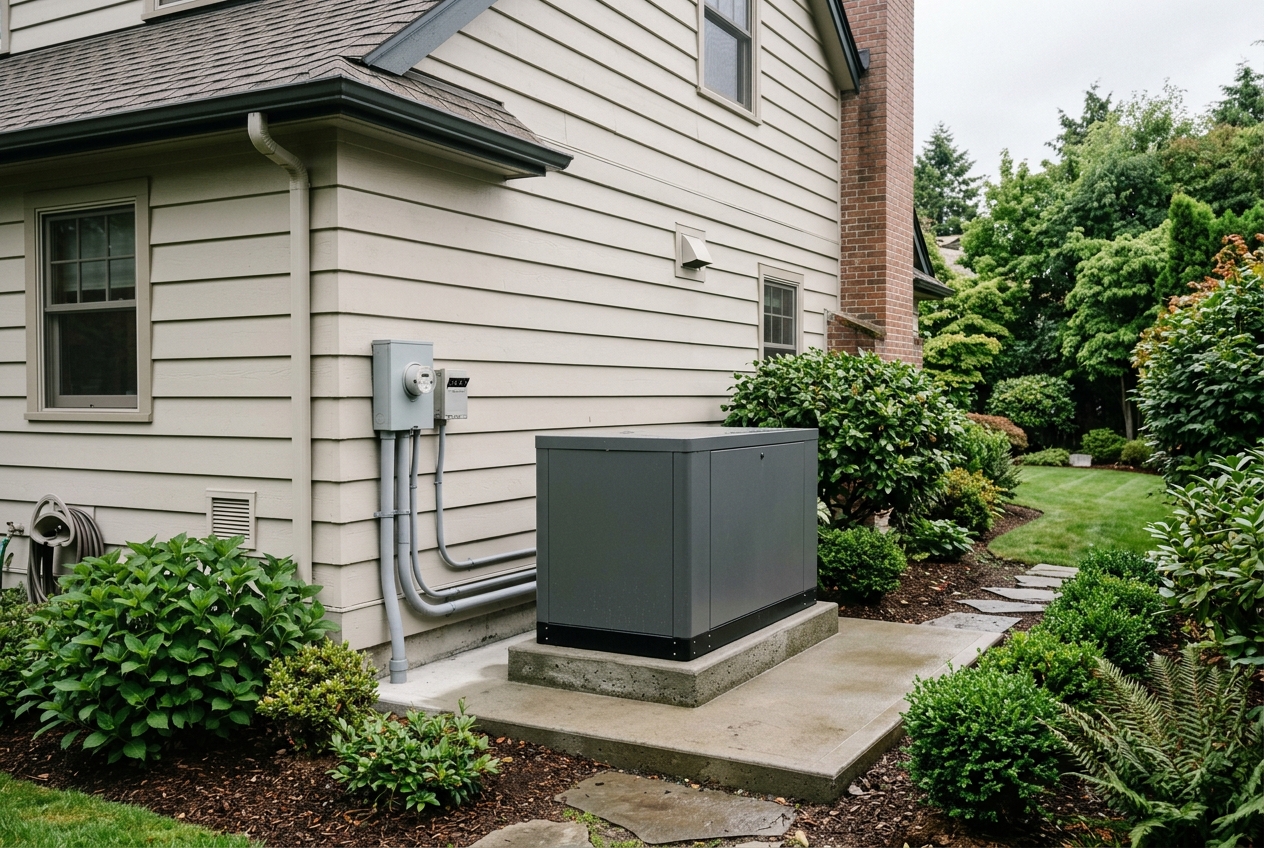
The generator itself commonly costs several thousand dollars, but installation is a major part of the budget: a typical whole-house standby system lands around $6,000 to $11,000 installed, with larger or more complicated projects costing more. Sizing should start with what you want running during an outage, not with your square footage. List your must-have loads, note which ones have high starting demand (well pumps, air conditioning, large motors), decide whether you will accept load management, and size from there. Two homes of identical size can need very different generators.
Unit-only prices exclude installation. The installed range covers typical electrical work, fuel connection, transfer equipment and a straightforward site. Ranges are guidance, not quotes. Verified 6 September 2026.
Already know the capacity you need?
Visitor arrives at a defensible capacity range based on the loads they actually want to run, rather than a square-footage rule of thumb.
Why square footage is the wrong input
Square footage tells you almost nothing about electrical demand. A large, well-insulated home with gas heat and gas water heating can have modest backup requirements. A smaller home with electric heat, a well pump and central air conditioning can have far higher requirements. Sizing from area rather than loads is how homeowners end up with a generator that either cannot carry what they wanted or costs considerably more than it needed to.
The four things that actually drive capacity
Running load
The steady demand of everything you want on at the same time. This is the baseline figure, and it is usually smaller than homeowners expect once they think in terms of priorities rather than 'everything'.
Starting load
Motors — well pumps, sump pumps, air conditioning compressors, some appliances — draw substantially more on startup than while running. Starting demand, not running demand, is frequently what dictates the generator size.
Heating and cooling
Electric heat and central air conditioning are the two loads most likely to force a large step up in capacity. A home with gas heat and a blower motor is a very different sizing problem.
Load management
Load-management devices and transfer switch configurations let a smaller generator serve more circuits by preventing large loads from running simultaneously. Accepting load management is often the difference between a practical unit and an oversized one.
Supporting questions
Natural gas, propane or diesel?
Natural gas removes refuelling but requires an adequately sized supply. Propane requires tank capacity sized to your expected outage duration. Each has different derating and installation considerations — confirm with your installer.
Do I need to power the whole house?
Rarely, and whole-house coverage is the most expensive answer. Most homeowners are better served by prioritised coverage with load management.
Would battery backup be better?
For short outages and quiet operation, batteries are attractive; for multi-day outages and high heating or cooling loads, generators still carry more. That comparison is a separate guide.
Deeper details
Affiliate disclosure: some links on Human Home Living may be affiliate links, and we may earn a commission at no additional cost to you. That does not affect our conclusions. See our affiliate disclosure and editorial standards.