Home Elevators & Accessibility
When stairs become the limiting factor in a home, accessibility equipment is often what keeps the whole house usable. Because these systems often require professional installation, it's important to understand your home's layout and requirements before choosing one.

Stairs and changes in floor level can make parts of a home difficult to access. The right equipment can help make everyday movement easier. The right answer depends less on the person and more on the building — how much floor area can be given up, what sits above and below the proposed shaft, how the staircase turns, and how much electrical capacity is available.
Because these products are installed rather than delivered, they are usually quoted after a site assessment. Treat published figures as a starting range and expect the final specification to be shaped by your home.
What this category includes
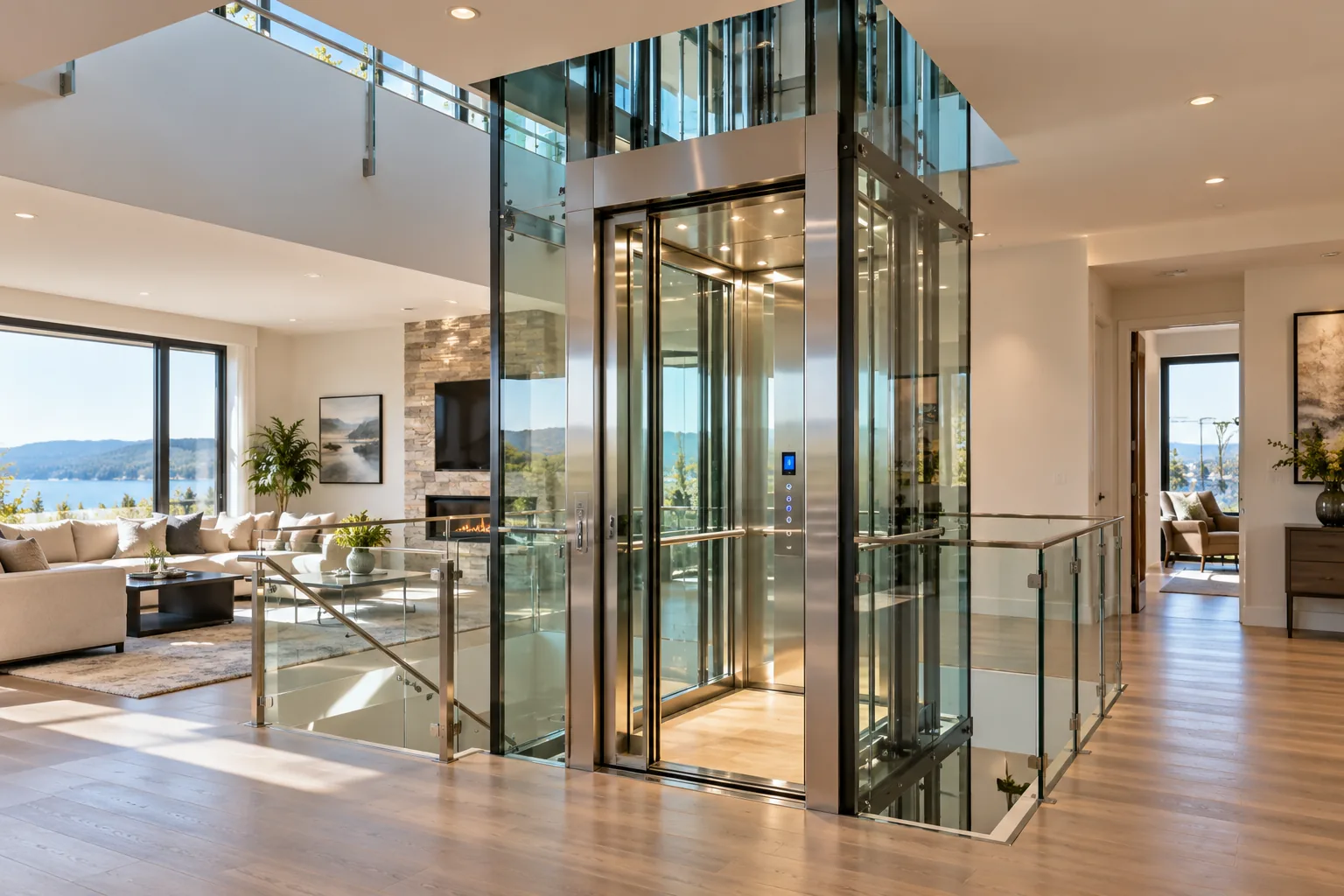
Residential elevators
Fully enclosed cabs serving two or more floors. Drive types differ in footprint, pit and headroom requirements, ride quality and machine-room needs, which is usually what narrows the choice for a given home.
Stair lifts
A powered seat on a rail fixed to the stair treads. Straight rails are the simplest and fastest to fit; curved and multi-landing staircases require a rail manufactured to measure.
Vertical platform lifts
Open or enclosed platforms that carry a wheelchair or scooter through a short rise — typically a porch, split-level or garage entry — without a full elevator installation.
Inclined platform lifts
A platform that travels along a staircase rather than through a shaft, used where a wheelchair must stay with its user and a vertical lift will not fit.
Home accessibility systems
Modular and threshold ramps, widened entries, grab systems and level-access alterations that remove smaller barriers around the lift or stair solution.
What to consider before purchasing
Space and structure
Elevators need a shaft, overhead clearance and, in most cases, a pit. Stair lifts need clear stair width with the carriage parked. Confirm the actual dimensions on site before shortlisting.
Installation and permits
Most of these products are professionally installed and many require permits and inspection. Ask what the quote includes: framing, electrical work, finishing and inspection fees are often separate.
Power supply
Dedicated circuits are common. Some units offer battery backup so the lift still works during an outage — worth asking about if a bedroom is upstairs.
Professional assessment
An occupational therapist or accessibility specialist can help determine which equipment best fits your home and daily needs.
Service and maintenance
These are mechanical systems with scheduled servicing. Confirm response times, parts availability and the cost of a service plan before comparing purchase prices.
Important information
Information in this section is provided for general research and planning purposes only and is not medical advice. Human Home Living is not a healthcare provider or medical equipment manufacturer. Depending on the product, medical and mobility equipment may require professional assessment, measurement, training, installation or a prescription. Always confirm suitability with a qualified clinician, therapist or installer for your situation.
Human Home Living may earn a commission when partner links appear on this page and a purchase is made, at no additional cost to you. We do not list partners or products until a partnership is approved.