Home Care & Patient Support
This category exists to protect two people at once. Equipment that makes a transfer safer for the person being moved usually also protects the person doing the moving — which is what keeps care at home sustainable.
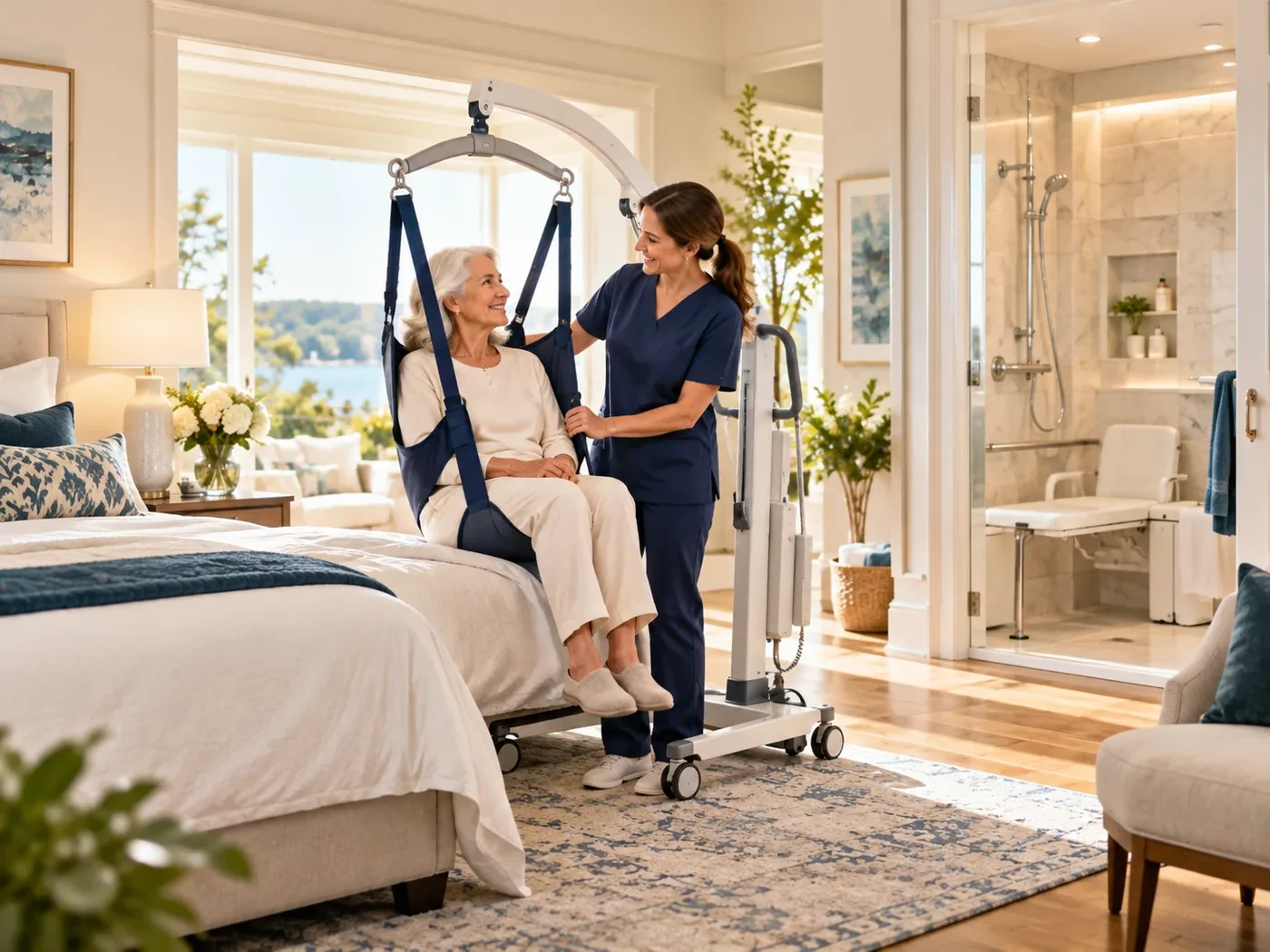
Transfers are where most home-care injuries happen, for both parties. Choosing equipment starts with how much the person can contribute to the movement: equipment that assists a standing transfer is very different from equipment that lifts someone entirely.
Bathing is the other high-risk routine. Wet surfaces, confined space and awkward clearances make this the room where good equipment and a professional assessment make the biggest difference.
Approved Medical & Mobility partners for this equipment category.

Prices and availability are shown by the merchant and change over time, so we do not list them here.
Human Home Living may earn a commission when you purchase through links on this page, at no additional cost to you.
What this category includes
Patient transfer lifts
Mobile floor lifts, sit-to-stand lifts and ceiling track systems. Floor lifts need clear floor space and a base that fits under the bed; ceiling systems need structural fixing but almost no floor space.
Transfer systems
Slide sheets, transfer boards, turntables and pivot aids for shorter moves where a full lift is not required.
Accessible bathing equipment
Walk-in and transfer-accessible bathing, shower chairs and commodes, bath lifts and grab systems positioned for the way the room is actually used.
Home-care support equipment
Overbed tables, bed rails and supports, positioning cushions and pressure-management accessories that make longer periods in bed or a chair more comfortable.
Supportive home-care solutions
Monitoring, call systems and smaller daily-living aids that reduce how often help has to be summoned in the first place.
What to consider before purchasing
Equipment fit
Slings, seats and supports are sized to a person. The wrong size is unsafe regardless of how good the lift is, so size them with a professional.
Space requirements
Measure the working space around the bed, chair and bathroom. A mobile lift needs room to approach, spread its legs and turn with someone in the sling.
Caregiver needs
Consider who performs transfers, how often, and alone or in pairs. Powered equipment that one person can operate safely often matters more than top specification.
Safe operation and training
Lifts and slings require training. Confirm who provides it, and that everyone involved — including family — is shown the same method.
Ceiling and wall fixing
Ceiling track and grab rails must be fixed into adequate structure. Have fixings specified and installed professionally rather than assumed.
Professional guidance
An occupational therapist or community nurse can assess transfers and recommend specific equipment, which is strongly advisable before buying in this category.
Explore Equipment From Our Partners
Human Home Living may earn a commission when you purchase through links on this page, at no additional cost to you.
Important information
Information in this section is provided for general research and planning purposes only and is not medical advice. Human Home Living is not a healthcare provider or medical equipment manufacturer. Depending on the product, medical and mobility equipment may require professional assessment, measurement, training, installation or a prescription. Always confirm suitability with a qualified clinician, therapist or installer for your situation.
Human Home Living may earn a commission when partner links appear on this page and a purchase is made, at no additional cost to you. We do not list partners or products until a partnership is approved.