
Power Mobility
Power mobility is bought for range of life, not range in miles. The practical question is where the equipment needs to go — indoors, around the neighbourhood, into a vehicle — because that usually rules out whole classes of product.
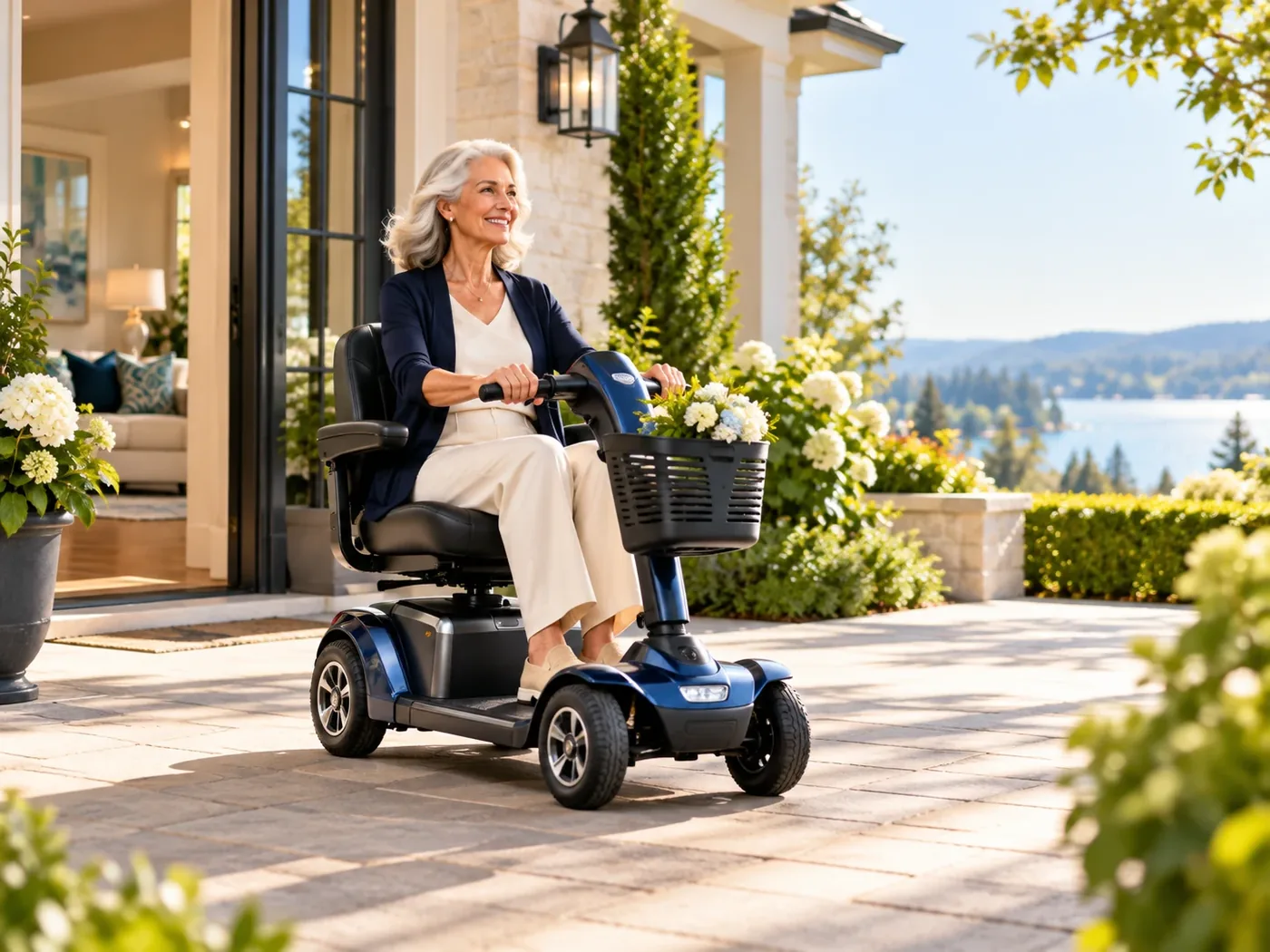
Indoor use rewards a tight turning radius and a compact base. Outdoor use rewards larger wheels, suspension and battery capacity. Equipment that travels frequently rewards weight and folded size. Very few products are excellent at all three.
Drive-wheel position is the other decision that shapes everyday use: front, mid and rear wheel drive each handle turning, kerbs and uneven ground differently, which is why a test drive on the surfaces you actually use is worth more than a specification sheet.
Approved Medical & Mobility partners for this equipment category.

Prices and availability are shown by the merchant and change over time, so we do not list them here.
Human Home Living may earn a commission when you purchase through links on this page, at no additional cost to you.
What this category includes
Premium power wheelchairs
Powered bases with clinical seating, often including tilt, recline, powered legrests or seat elevation for posture, pressure relief and reach.
High-end mobility scooters
Three and four-wheel scooters for people who can walk short distances and transfer independently. Four wheels favour stability, three favour turning space.
Folding electric mobility
Lightweight chairs and scooters that fold or separate for a car boot, trading range and ground clearance for portability.
Specialty mobility solutions
All-terrain, standing, bariatric and custom-configured equipment for needs the mainstream ranges do not cover.
What to consider before purchasing
Maneuverability
Compare turning radius against your tightest real doorway, hallway and bathroom — not against an average room.
Range and terrain
Published range assumes ideal conditions. Hills, cold weather, rider weight and soft ground all reduce it, so build in margin for the return trip.
Charging and batteries
Check charge time, whether batteries can be removed and charged indoors, and the expected replacement interval and cost.
Dimensions and weight
Note overall width, length, ground clearance and total weight — including the heaviest single piece if someone has to lift it.
Transportation
Confirm how the equipment travels: folded into a boot, on a vehicle lift, or secured inside an accessible vehicle with the user seated.
Professional fitting
Seating, posture and controls for a power wheelchair are usually specified with a clinician. Scooters are simpler, but transfers and balance still need an honest assessment.
Explore Equipment From Our Partners
Human Home Living may earn a commission when you purchase through links on this page, at no additional cost to you.
Important information
Information in this section is provided for general research and planning purposes only and is not medical advice. Human Home Living is not a healthcare provider or medical equipment manufacturer. Depending on the product, medical and mobility equipment may require professional assessment, measurement, training, installation or a prescription. Always confirm suitability with a qualified clinician, therapist or installer for your situation.
Human Home Living may earn a commission when partner links appear on this page and a purchase is made, at no additional cost to you. We do not list partners or products until a partnership is approved.