
Respiratory & Emergency Equipment
This is the most tightly regulated category in this section, and the one where general information is most useful and specific recommendations are least appropriate. We explain how the equipment differs; a clinician decides what is right for a person.
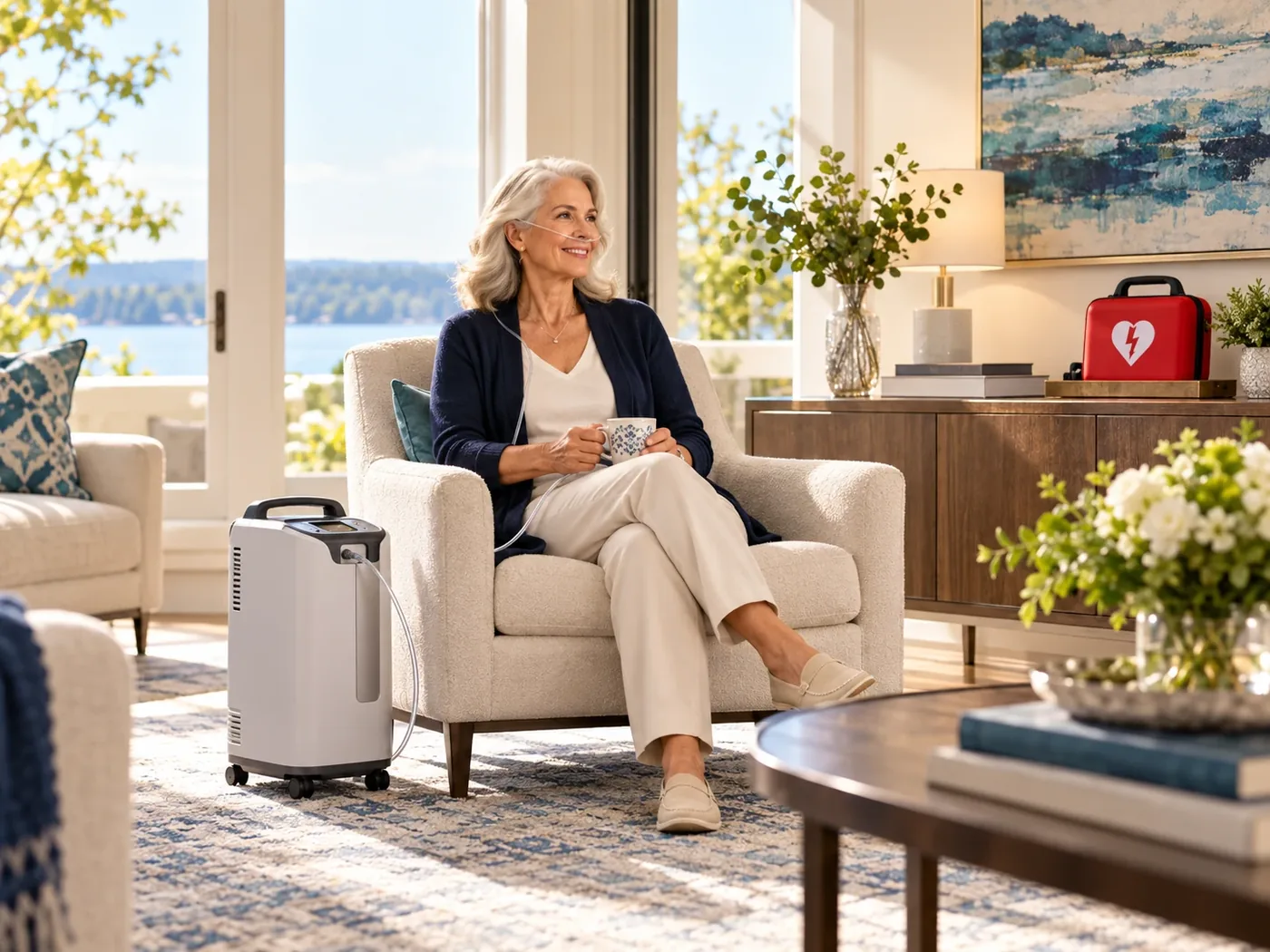
Oxygen equipment is prescribed. Flow rate, delivery method and whether a device delivers a continuous flow or pulsed doses are clinical decisions, and a device that suits one person's prescription can be unsuitable for another's.
Emergency equipment follows a different logic: it is bought in advance, rarely used, and has to work immediately when it is. Readiness — placement, battery and pad expiry, and whether anyone present knows where it is — matters as much as the specification.
Approved Medical & Mobility partners for this equipment category.

Prices and availability are shown by the merchant and change over time, so we do not list them here.
Human Home Living may earn a commission when you purchase through links on this page, at no additional cost to you.
What this category includes
Portable oxygen concentrators
Battery-powered units for travel and time away from home. Most deliver pulse doses, which is why a prescription has to state whether pulse delivery is acceptable.
Stationary oxygen concentrators
Mains-powered home units offering higher continuous flow capability, usually paired with tubing that allows movement around the house.
Respiratory support equipment
Nebulisers, suction units, airway clearance devices and sleep-therapy equipment, typically supplied and set up under clinical direction.
AEDs
Automated external defibrillators for homes, workplaces and community spaces, including cabinets, pads and training units.
Home and workplace emergency equipment
First aid provision, emergency oxygen where permitted, and backup power considerations for households that depend on powered medical equipment.
What to consider before purchasing
Prescription and evaluation
Oxygen therapy and much respiratory equipment requires a prescription or professional evaluation. Nothing in this section should be read as a recommendation that a device suits any individual's medical condition.
Flow and delivery
Match the device to the prescribed flow rate and delivery type. Continuous flow and pulse dose are not interchangeable.
Battery life and power
For portable units, check real battery duration at the prescribed setting, charging time and spare battery options. For mains units, plan for power outages.
Noise, weight and travel
Weight, noise level and airline approval decide whether a portable unit genuinely gets used away from home.
Maintenance and consumables
Filters, cannulas, tubing, AED pads and batteries all expire. Include replacement intervals and costs in any comparison.
Training and placement
Emergency equipment only helps if it is reachable and someone is confident using it. Plan placement and training at the same time as the purchase.
Explore Equipment From Our Partners
Human Home Living may earn a commission when you purchase through links on this page, at no additional cost to you.
Important information
Information in this section is provided for general research and planning purposes only and is not medical advice. Human Home Living is not a healthcare provider or medical equipment manufacturer. Depending on the product, medical and mobility equipment may require professional assessment, measurement, training, installation or a prescription. Always confirm suitability with a qualified clinician, therapist or installer for your situation.
Human Home Living may earn a commission when partner links appear on this page and a purchase is made, at no additional cost to you. We do not list partners or products until a partnership is approved.